
Tendon pain can make simple daily activities uncomfortable. While rest, physiotherapy and medication often help, some tendon injuries continue to cause pain for months. In these situations, your orthopaedic doctor may discuss other non-surgical treatment options, including shockwave therapy for tendon healing.
Key Takeaways
- Shockwave therapy for tendon healing may be considered for certain long-lasting tendon conditions that have not improved with conservative treatment.
- It uses acoustic (sound) waves to stimulate the body’s natural healing response in the affected tendon.
- The treatment is non-surgical, usually performed as an outpatient procedure, and generally requires little downtime.
- An orthopaedic assessment is important to determine whether this treatment is suitable for your condition.
Why Does Tendon Pain Sometimes Continue Even After Rest?
Tendons connect muscles to bones and help your body move efficiently. Repeated strain, ageing, sports injuries or certain occupations can lead to tendon damage. While many tendon injuries improve with time, some become persistent because,
- The tendon has developed long-term degeneration rather than acute inflammation.
- Repeated movements continue to stress the injured tissue.
- Blood supply to certain tendons is naturally limited.
- Returning to activity too quickly may delay recovery.
Common conditions include,
- Tennis elbow
- Golfer’s elbow
- Achilles tendinopathy
- Plantar fasciitis
- Patellar tendinopathy (jumper’s knee)
- Rotator cuff tendinopathy
If symptoms continue despite appropriate treatment, further assessment may be recommended.
What Is Shockwave Therapy for Tendon Healing?
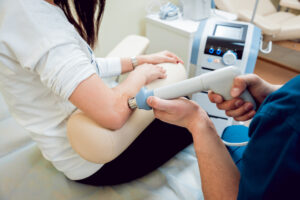
During treatment,
- A handheld device is placed over the painful tendon.
- Acoustic waves are delivered to the affected tissue.
- Each session typically takes around 15–20 minutes.
- Several treatment sessions may be recommended depending on your condition and clinical assessment.
The treatment does not involve surgery or injections.
How Can Sound Waves Support Tendon Recovery?
Although ongoing research continues to improve our understanding, shockwave therapy is believed to support tendon healing by
- Stimulating the body’s natural tissue repair processes
- Encouraging blood vessel formation around the injured tendon
- Promoting cellular activity involved in healing
- Helping reduce pain sensitivity in some patients
- Supporting improved tendon function when combined with appropriate rehabilitation
It is important to note that treatment outcomes vary from person to person, and no treatment can guarantee complete symptom relief.
Who May Be Suitable for This Treatment?
Your orthopaedic doctor may consider shockwave therapy for tendon healing if you,
- Have tendon pain lasting several months
- Have not experienced sufficient improvement after rest and physiotherapy
- Wish to explore non-surgical treatment options where appropriate
- Have a diagnosis confirmed through clinical assessment and, if necessary, imaging
However, shockwave therapy may not be appropriate for everyone. Your doctor will consider your overall health, medical history and the nature of your tendon condition before recommending treatment.
What Should You Expect After Treatment?
Many patients can return to normal daily activities shortly after each session. Following treatment, your doctor may advise you to,
- Continue a structured physiotherapy programme
- Perform prescribed strengthening exercises
- Avoid excessive loading of the tendon during early recovery
- Attend follow-up reviews to monitor progress
Recovery timelines differ between individuals, and improvement may occur gradually over several weeks.
Frequently Asked Questions
Is shockwave therapy painful?
Some people experience mild discomfort during treatment, particularly over tender areas. The level of discomfort varies depending on the condition being treated and individual pain sensitivity.
How many sessions are usually required?
The number of sessions depends on the tendon involved, symptom duration and your doctor’s assessment. Your treatment plan will be tailored to your condition.
Can shockwave therapy replace surgery?
For some tendon conditions, shockwave therapy may be considered before surgical treatment. However, not every patient is suitable, and surgery may still be recommended in certain situations after careful evaluation.
Is there any downtime after shockwave therapy?
Most patients can resume normal daily activities soon after treatment. Your doctor may recommend temporarily modifying high-impact activities depending on your condition.
Consult an Orthopaedic Doctor About Persistent Tendon Pain
If tendon pain continues to interfere with your daily activities despite rest or conservative treatment, it may be time for a comprehensive assessment.
At Centre for Advanced Orthopaedics, Dr Sarbjit Singh provides personalised evaluation and discusses appropriate treatment options based on your diagnosis, symptoms and lifestyle. If you would like to understand whether shockwave therapy for tendon healing may be suitable for your condition, arrange a consultation to receive an individualised treatment plan.